
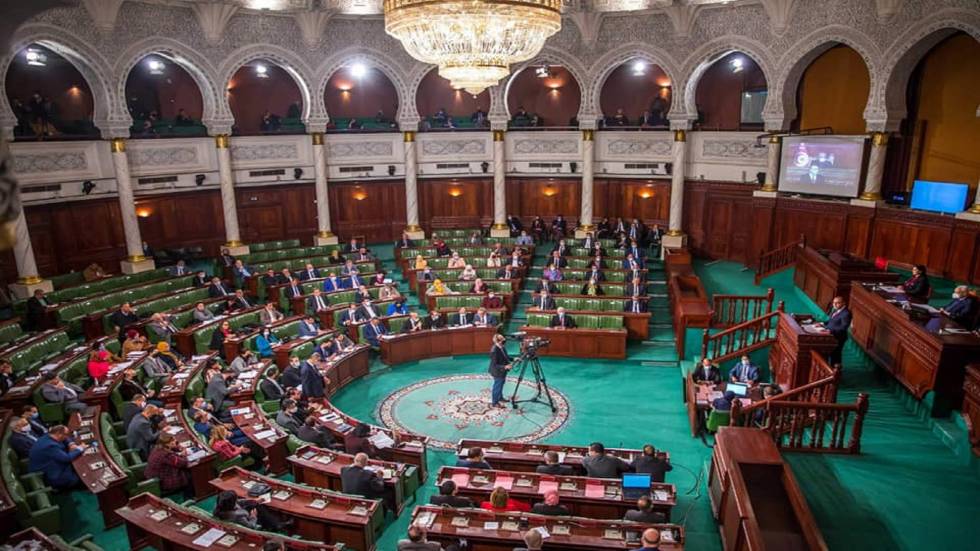
A statement of the International Islamic Forum of Parliamentarians, signed by 181 deputies from the parliaments of 19 Arab and Islamic countries, on Sunday, called on the Tunisian authorities to immediately release their fellow deputies detained in Tunisia, who are being prosecuted for political opinion cases, including the dissolved Parliament Speaker, Rashid Ghannouchi.
The statement stressed that the arrest of parliamentarians in Tunisia leads to “undermining freedoms and threatening the most important pillars of democracy in the country, and even returning it to pre-Jasmine Revolution practices that were praised by the world, and perpetuating a state of frustration and despair among the masses of the Tunisian people, who have always been a race to demand freedom.” social justice, and national dignity.”
The forum’s statement expressed its deep concern about what it described as “a setback in the human rights situation in Tunisia, and the arrests of a large number of politicians, most notably Parliament Speaker Rashid Ghannouchi, former minister Ghazi Chawashi, former deputy and prime minister Ali Larayedh and others.”
The parliamentarians expressed their full solidarity with the “politically imprisoned” Tunisian deputies, and their defense of their “basic rights,” condemning the injustice inflicted on them, and calling on “the Tunisian regime to release them.”
The head of the Nahda Movement, Rashid Ghannouchi (81 years), was arrested on April 17 by a security unit based on permissions from the Public Prosecution, due to statements that the authorities considered “inciting” during a meeting of the opposition Salvation Front.
Ghannouchi faces 9 cases with charges that carry penalties up to the death penalty, according to the statements of the defense authority, such as the case of “conspiracy against state security”, the case known in the media as “deportation to hotbeds of tension”, the case of the “secret apparatus of Ennahda movement”, in addition to the case of “Anstalingo”. These are issues that the opposition considers political and vexatious as part of the campaign of arrests that targeted its leaders.
In the context, the United Nations High Commissioner for Human Rights, Volker Türk, on Friday expressed his concern about what he described as Tunisia’s “retreat” in the field of human rights, according to a statement published on the website of the United Nations Office for Human Rights “OCHA”.
Türk expressed his concern about what he described as “the increasing restrictions imposed on the right to freedom of expression and freedom of the press in Tunisia.” He added, “It is disturbing to see Tunisia, a country that once bore so much hope, retreat and lose many of the gains made in the field of human rights in the last decade.”